
The Era of Big Data
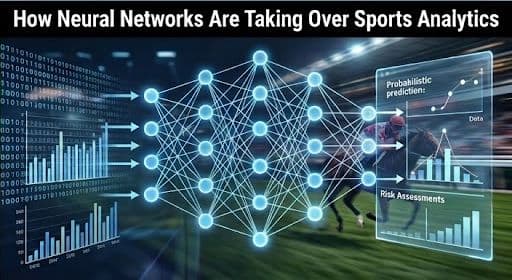
The sports analytics industry has moved far beyond simple spreadsheets and linear regression. Today, syndicates and professional bettors utilize deep neural networks to process variables that human handicappers could never track simultaneously. In horse racing, where variables range from track moisture to jockey weight adjustments, machine learning is essential.
Neural networks excel at finding non-linear relationships in data. For instance, a human might know that Horse A runs well on wet ground. A neural network knows that Horse A runs well on wet ground, but only when the temperature is above 60 degrees, the pace is contested, and the horse is returning from a 14-to-21 day rest.
Training the Model
Our models at Equine Intel are trained on millions of historical data points. The Machine Learning is essentially "shown" the conditions of a race and the ultimate outcome, and asked to adjust its internal weights to better predict future races. Over thousands of iterations, the model learns the exact mathematical value of a 5-pound jockey claim or an outside draw on a specific track.
The beauty of the neural network is that it learns from its mistakes. Every single day of racing data is fed back into the system, allowing the Machine Learning to constantly refine its predictions and adapt to changing track biases and trainer patterns.
The Future of Betting
As betting markets become more efficient, the margin for error decreases. The "gut feeling" bettor is rapidly becoming obsolete. The future belongs to those who leverage computational power to identify minute edges in probability. By granting you access to enterprise-grade Machine Learning models, Equine Intel levels the playing field.